
 US Stocks
 US Options
 ETFs
ETFs Emerging Asia
 GBP Cash Savings
 Charts & Tools
 Paper Trading
 Extended Hours
 Wall Street Journal
 TradingView
Emotion Management in Stock Trading
What is emotional trading?
A stock in your watchlist drops to a new low. Fearing that the price may drop further, you hesitate to open a long position. After waiting for some time, the price starts to push higher and higher. Tempted by the price hike, you enter a long position despite the high price to share the profits. Then the market cools down and the price starts to tumble. Instead of pulling yourself out in time to stop losses, you choose to wait for the price to rebound to avoid actual losses. Finally, when the price declines further, you panic and close your position.
This is how you end up buying at the top and selling at the bottom. From the beginning to the end, you let your emotions like fear of loss, greed, panic, etc. control your trading.
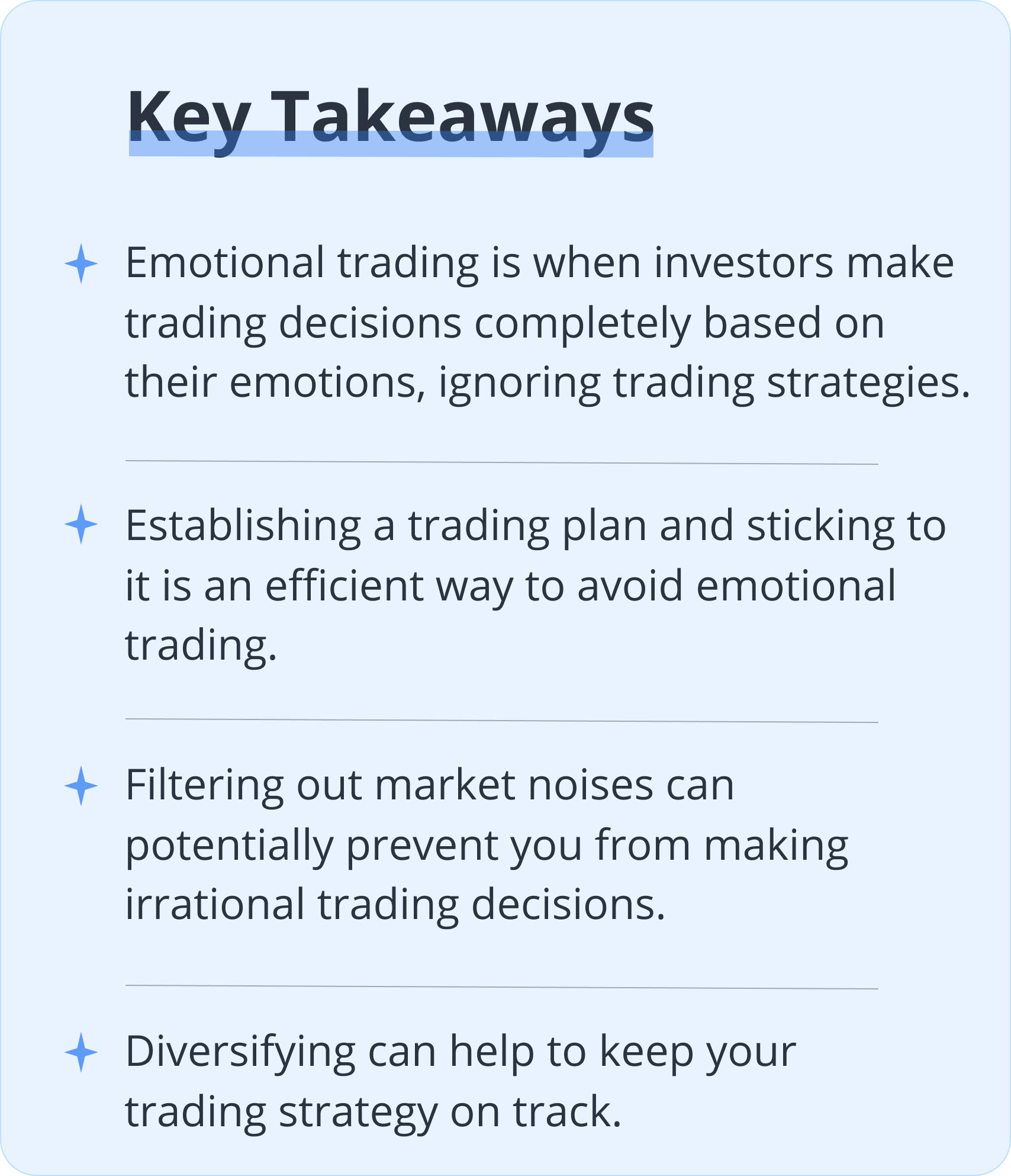
This example shows us that emotional trading is when investors make trading decisions completely based on their emotions, ignoring trading strategies.
How can we avoid emotional trading?
Emotional trading exposes investors to unnecessary risks and may cause unexpected losses, damaging their trading confidence.
There are a series of measures that investors can take to avoid emotional trading.
Set up a trading plan
Establishing a trading plan and sticking to it is an efficient way to avoid emotional trading.
Your trading plan should include an entry strategy: entering a position when one or more specific conditions are met. You can formulate your entry strategy based on technical and fundamental analysis. An exit strategy should also be included: exiting a position when your profit target or maximum loss is reached. You usually need to set a risk/reward ratio and place orders to lock in profits or stop losses.
When you adhere to your trading plan instead of following the herd, you can make an entry when the price is relatively low, or when a bullish trend is expected. Instead of selling out of panic, your position will be protected by stop-loss measures.
Avoid market noise
There may be a significant amount of news each day for a stock you’re trading. Not all of it provides valuable information or has a lasting market impact. If you cannot differentiate information from market noise, you may overreact to unimportant news, and make irrational trading decisions.
So, only pay attention to important news that might affect your decision-making. You don’t need to go through every piece of news as they are released. This may cause you to neglect your trading strategy.
Diversify
If you put all your money in one particular stock, your risk will be too concentrated. When the market turns against you, you’ll be more likely to panic and might sell your shares early before the stop-loss level is reached.
In contrast, when you put your money into different stocks in multiple sectors, your risks are spread out. This way, when a stock price strays from your expectations, it can cause less stress as you know that you have other investments that are still rising as expected. This can help you keep your trading strategy on track and build your trading confidence.
The bottom line
Letting your emotions control your trading can be hazardous. It can potentially lead you to heavy losses and shatter your confidence. To help eliminate the impact of emotions in trading, you can set up a trading plan, filter out noise, and spread risk by diversifying your portfolio.